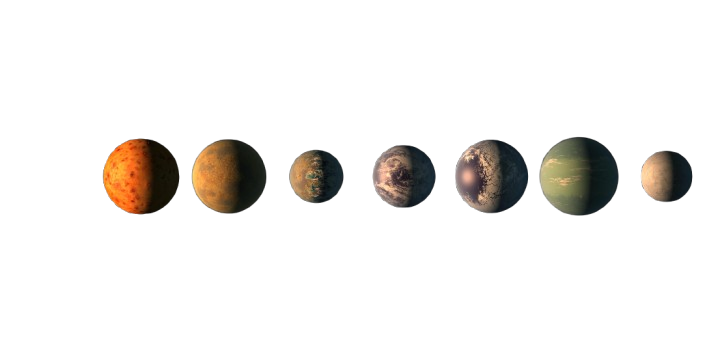
Discovered in 2017 by multiple observatories using the transit method, TRAPPIST-1 e is one of the most exciting exoplanets in the TRAPPIST-1 system, known for its potential habitability. Orbiting an ultracool dwarf star at a distance of 12.43 parsecs (approximately 40.5 light-years) from Earth, this planet has garnered attention due to its Earth-like characteristics and relatively temperate climate. In this article, we will explore the details of TRAPPIST-1 e and compare it to Earth and Jupiter.
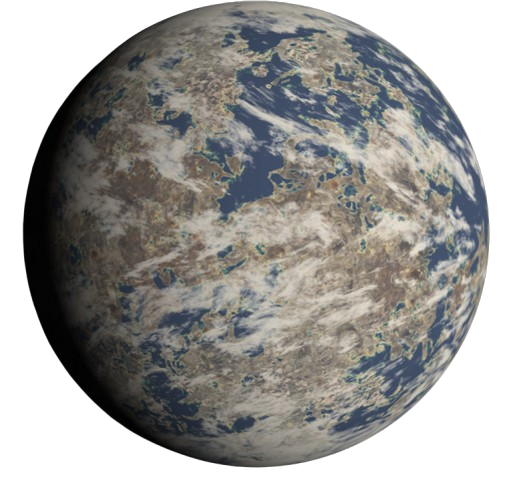
TRAPPIST-1 e is a rocky planet with a mass of 0.692 Earth masses and a radius of 0.92 Earth radii, making it slightly smaller and less massive than Earth. It orbits its host star at 0.02925 AU, resulting in a moderate equilibrium temperature of 250 K (-23°C) and an orbital period of 6.1 days. This planet resides in the habitable zone, potentially allowing liquid water to exist on its surface.
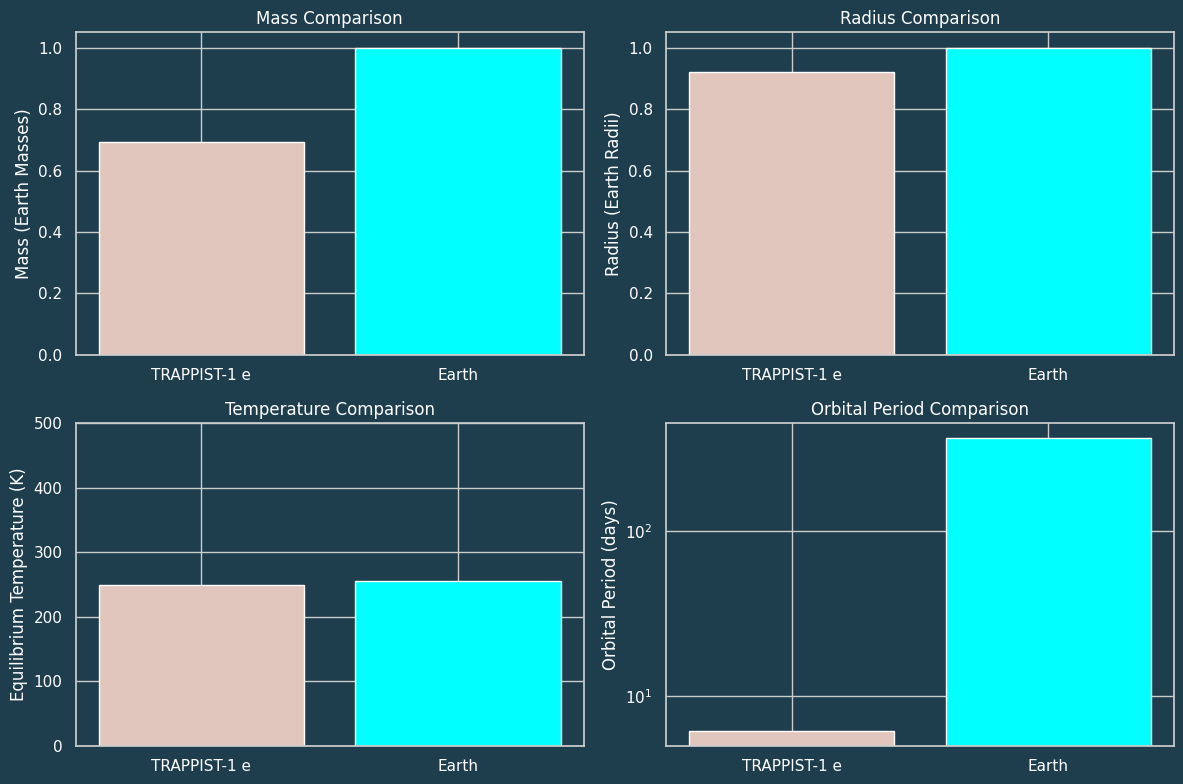
TRAPPIST-1 e exhibits some striking similarities to Earth:
Mass and Size: With a mass of 0.692
Earth masses and a radius of 0.92 Earth radii, it is almost
identical to Earth in size.
Orbital Characteristics: Orbits much
closer to its star at 0.02925 AU, with a year lasting just 6.1
days compared to Earth’s 365 days.
Temperature:Has an equilibrium
temperature of 250 K, within the range where liquid water could
exist, compared to Earth’s 288 K.
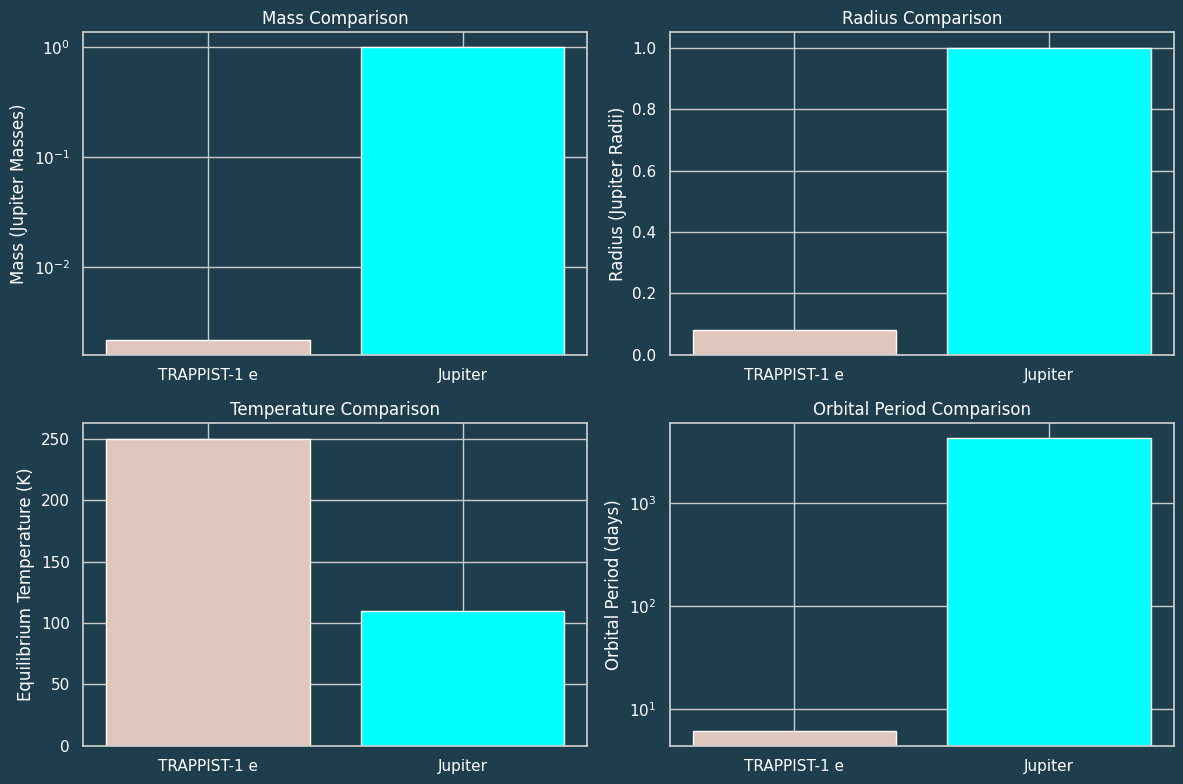
The differences between TRAPPIST-1 e and Jupiter are more dramatic:
Mass and Size:TRAPPIST-1 e has a mass
of 0.692 Earth masses, while Jupiter has 318 Earth masses.
TRAPPIST-1 e’s radius is 0.082 Jupiter radii.
Orbital Characteristics:Orbits at
0.02925 AU with a year lasting just over 6 days, compared to
Jupiter’s 5.2 AU and nearly 12-year orbit.
Temperature: TRAPPIST-1 e has a
higher equilibrium temperature of 250 K compared to Jupiter’s 165
K.
TRAPPIST-1e is regarded as potentially habitable, with conditions that may support liquid water and, by extension, life. This evaluation is derived from our machine learning model, which assesses its environmental parameters.