Discovered in 1992 using the pulsar timing method at the Arecibo Observatory, PSR B1257+12 c is one of the earliest exoplanets ever identified. Orbiting a pulsar, a rapidly rotating neutron star, this planet offers a unique glimpse into an unusual planetary system. Located 600 parsecs (about 1,957 light-years) away from Earth, PSR B1257+12 c has characteristics that distinguish it from planets orbiting traditional stars. Let’s dive into its features and compare it with Earth and Jupiter.
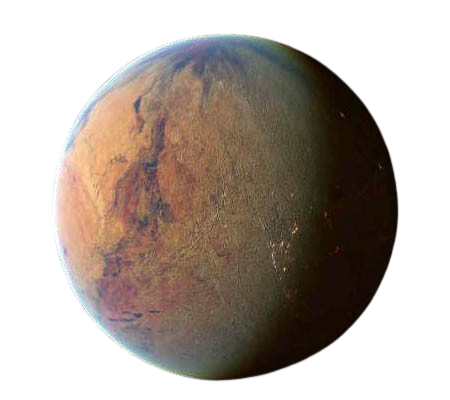

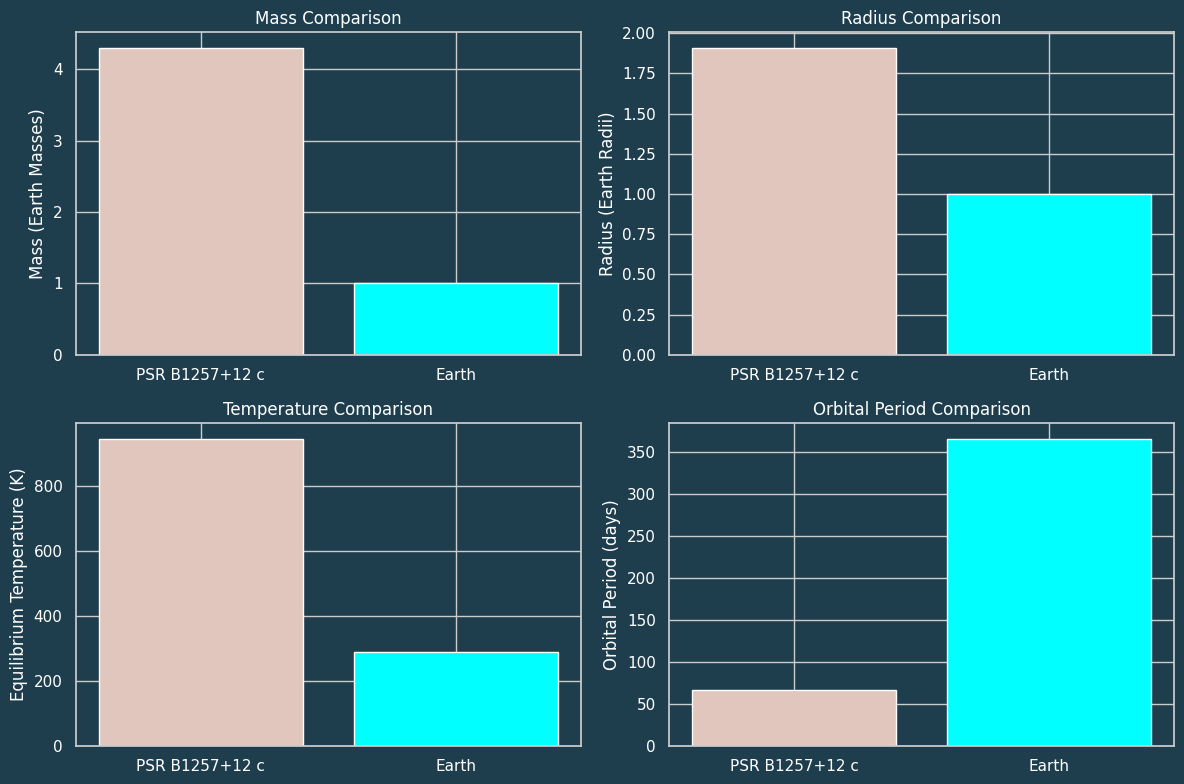
PSR B1257+12 c has a mass of 4.3 Earth masses (0.01353 Jupiter masses) and a radius of 1.91 Earth radii (0.17 Jupiter radii). It orbits its pulsar host at 0.36 AU, completing one orbit in 66.54 days. As one of the first exoplanets discovered, it sparked interest due to its association with a pulsar, a remnant of a supernova, highlighting the diverse environments in which planets can exist.
PSR B1257+12 c exhibits significant differences from Earth:
Mass and Size:
With a mass of 4.3 Earth masses and a radius of 1.91 Earth radii, it is more massive and larger
than Earth.
Orbital Characteristics: Orbits much closer to its pulsar at 0.36
AU, compared to Earth’s 1 AU from the Sun, with an orbital period of 66.54 days versus Earth’s
365 days.
Environment: The planet experiences intense radiation from its
pulsar, making it a harsh and uninhabitable world compared to Earth’s stable, warm climate.
PSR B1257+12 c is much smaller than Jupiter:
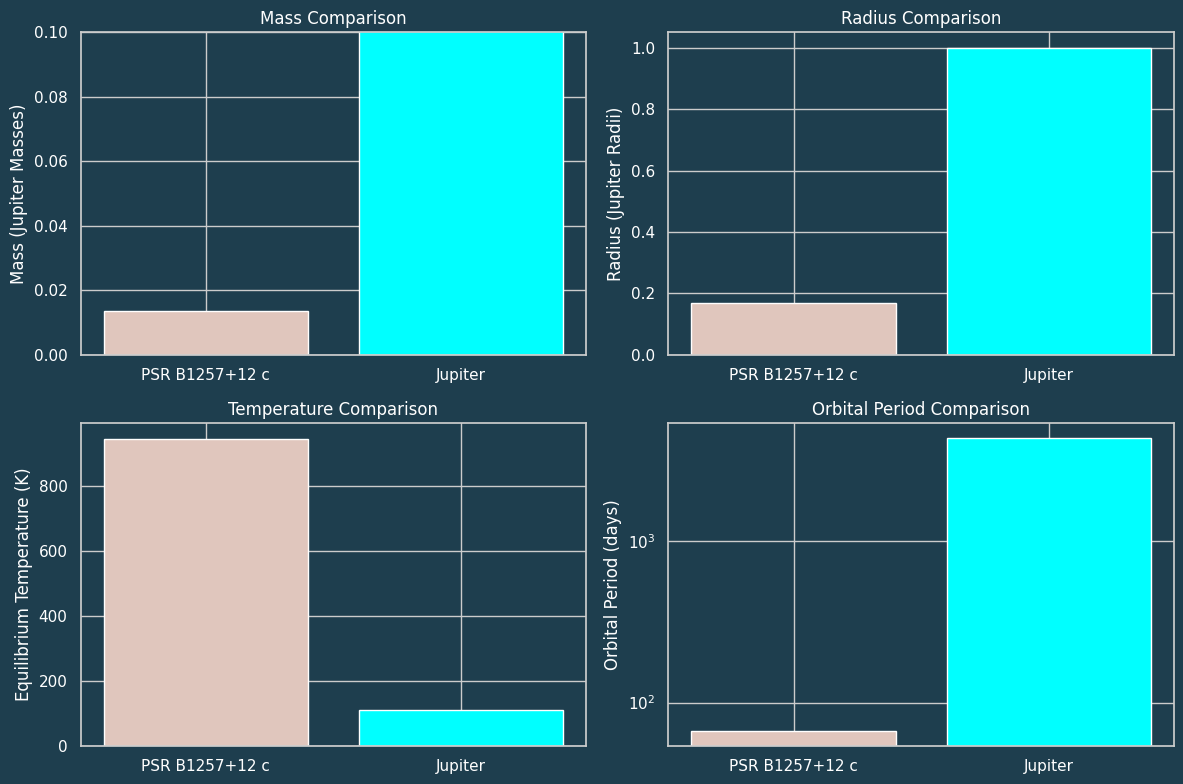
Mass and Size:It has a mass of 0.01353 Jupiter masses and a radius
of 0.17 Jupiter radii, significantly less massive and smaller than
Jupiter.
Orbital Characteristics:Orbits at 0.36 AU with a period of 66.54
days, compared to Jupiter’s 5.2 AU and nearly 12-year orbit.
Host Star: Orbits a pulsar, a neutron star emitting rapid
radiation pulses, unlike Jupiter’s stable star. This makes the environment around PSR B1257+12 c
much more hostile.
PSR B1257+12 c is a fascinating planet due to its early discovery and location in a pulsar system. It differs significantly from Earth and Jupiter, representing the diversity of exoplanetary systems. Though unlikely to support life, it offers valuable insights into the formation and survival of planets around neutron stars, deepening our understanding of planetary systems beyond the Solar System.